
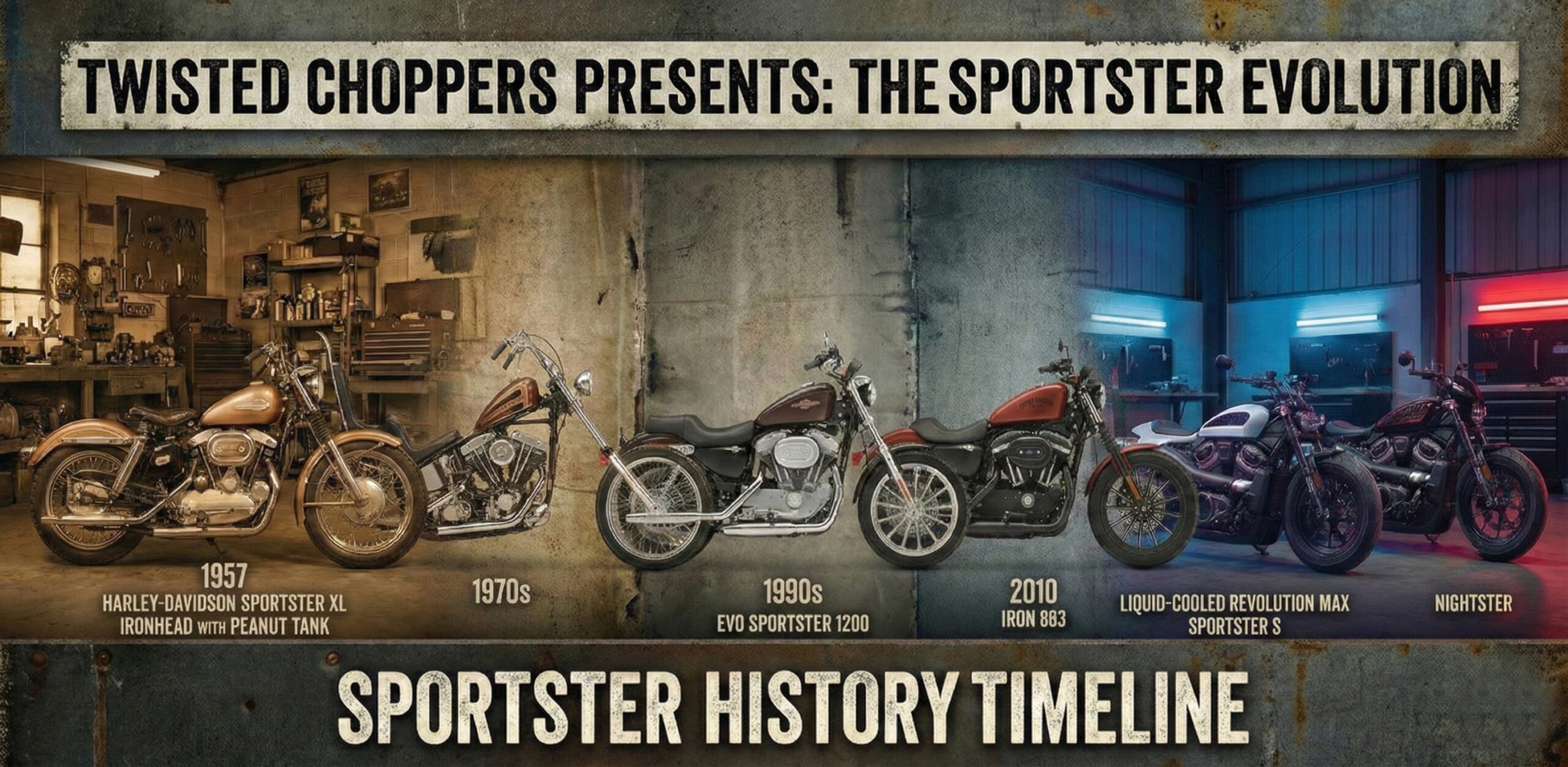
From the K-Model to the Revolution Max
I. THE PRE-SPORTSTER ERA (1952–1956)
1952
- Introduction of the Model K: 750cc Flathead V-Twin engine.
- First Harley-Davidson with a hydraulic rear suspension (swingarm).
- Unit construction (engine and transmission in one case).
1954
- Model KH Introduced: Displacement increased to 883cc (54 ci) via a longer stroke.
- “Trapdoor” Transmission: Allowed access to the gearbox without splitting the engine cases.
II. THE IRONHEAD ERA (1957–1985)
1957
- Introduction of the XL Sportster: Overhead Valve (OHV) engine introduced, replacing the flathead.
- Iron heads and iron cylinders.
1958
- XLCH (Competition Hot) Introduced: High-performance model.
- Peanut Tank: First appearance of the iconic 2.2-gallon tank (originally from the Model S).
1972
- Displacement increased from 900cc to 1000cc (61 ci).
1977
- XLCR Café Racer: Introduced with unique frame, bikini fairing, and dual front discs.
1979
- “FAMES” Year: “Fits All Models Except Seventy-nine.” Unique one-year-only frame derived from the XLCR.
III. THE EVOLUTION ERA (1986–2022)
1986
- First year of the Evo Sportster: Came in 883 and 1100cc displacement.
- Aluminum heads and cylinders introduced.
- Hydraulic lifters introduced.
- 34mm fixed-venture Keihin carb.
- 883 Heads: Bathtub chamber shape (shallow), 49.5cc chamber, 1.585″ intake / 1.350″ exhaust valves.
- 1100 Heads: Pear-shaped chamber, very large valves. Considered the best factory head until 1998.
- 1100 specs: 62cc chamber, 1.844″ intake / 1.610″ exhaust valves.
1987
- 883 head chamber changed to “D” shape (3″ round).
- 1100 heads given smaller valves (1.715″ intake / 1.480″ exhaust), but chamber remained excellent.
1988
- 1200cc engine replaces the 1100cc.
- 39mm Fork Tubes replaced the older 35mm unit.
- 40mm constant velocity (CV) Keihin slide carb introduced.
- 1200 head chamber enlarged to match 3.498″ bore (hemi chamber, poor turbulence).
1989
- Kickstand repositioned further rearward.
1990
- 40mm CV Carb standardized w/ accelerator pump.
1991
- 5-speed transmission replaced the 4-speed.
- Belt drive replaced chain on 883 Deluxe and 1200 models.
- Hydraulic lifters replaced with automotive type units.
- Alternator moved from behind clutch to the crankshaft.
- Breather system moved from crankcase to the heads (umbrella valves).
- Tappet blocks, rear motor mount, and oil filter integrated with case.
1992
- Standardized hand controls.
1993
- Belt drive now standard on all Sportster models.
1994
- Oil tank revised (visually identified by battery tray drain line).
- Derby cover revised to large 4-bolt cover (new quick-release clutch cable).
- New electrical system with weatherproof connectors.
- 883s received aluminum lower triple clamps.
- Frame changed to straight rear fender struts.
1995
- Switched to electric speedometer.
- Vacuum operated petcock added.
- Ignition switch moved to steering column.
- Unified crank assembly balanced between 883 and 1200 weights.
1996
- XL1200C Custom introduced (1200cc, 21-inch front wheel, chrome/forward controls).
1997
- Larger 3.3 gallon “Peanut” tank becomes standard on 883 models (replacing the 2.2 gallon).
1998
- Revised ignition system (single fire).
- 1200S Sport model gets dual-plug heads and hotter cams.
1999
- Redesigned shifter detent plate (improved shifting).
2000
- Sealed wheel bearings introduced.
- 4-piston brake calipers introduced.
- Pressed together flywheel assembly.
- Finer pitch cam gears.
2001
- New primary chain tensioner.
2002
- New, improved charging rotor/sprocket assembly (8 bolts vs 4 bolts).
2003
- Final year for solid mount engine models.
- 100th Anniversary paint schemes.
2004
- Major Redesign: Engine is rubber mounted.
- Trap door transmission eliminated (cases must be split to access trans).
- Rear tire width increased to 150mm.
- New air cleaner cover & oil tank placement.
- Heads: New 7mm valve stems and beehive springs (accommodates .550 lift).
- Cooling: Larger fins on heads & introduced oil squirters under pistons.
2005
- Swing arm & rear wheel re-designed for 1″ rear axle.
2006
- Transmission updated to helical gears for quieter operation.
2007
- EFI Era Begins: Fuel Injection replaces Carburetors on all models.
- Manifold attachment surface machined down 1/16″ for EFI throttle body.
- Bolt pattern widened for the intake manifold flanges.
2008
- Axle Update: Changed to 25mm hollow axles.
- XR1200 Introduced: Flat-track inspired styling with inverted forks and tuned engine.
2009
- Iron 883 (XL883N): Debut of the blacked-out bobber style.
2010
- Forty-Eight (XL1200X): Debut of the “fat tire” Sportster with under-bar mirrors.
- ECU relocated to allow for a cleaner rear fender look.
2014
- CANBUS Update: Complete electrical overhaul.
- Brakes: ABS becomes an option; new master cylinders.
- Keyless: H-D Smart Security System (Key fob) introduced.
2016
- Suspension Upgrade: New cartridge forks and emulsion rear shocks with screw adjusters (drastically improved ride quality).
2022
- End of an Era: Final production year for the air-cooled Evolution Sportster (XL883N / XL1200X).
IV. THE REVOLUTION MAX ERA (2021–Present)
2021
- Sportster S Launched:
- Liquid-cooled Revolution® Max 1250T engine (121 hp).
- Chassis uses the engine as a stressed member (no frame loops).
- 4″ TFT display, Cornering ABS, and Ride Modes.
2022
- Nightster (RH975) Launched:
- Revolution® Max 975T engine (90 hp).
- Traditional twin-shock silhouette with a 19-inch front wheel.
2023
- Nightster Special Launched:
- Adds TFT display (with Bluetooth/Maps) and passenger pillion.
- Replaces the standard Nightster as the primary model.
2025
- Sportster S Suspension Update:
- Rear suspension travel increased by 60% (from 2.0″ to 3.2″).
- New fully adjustable Showa components for improved comfort.
- Style: Engine cases switch from Bronze to Black.
2026
- Current Lineup: Sportster S, Nightster Special, Nightster.
- New Trim: “Blood Orange” package for Nightster with 1970s flat-track tank graphics.
- Tech: Traction Control (TCS) and Drag-Torque Slip Control (DSCS) are standard.